

Durand Line Not Sole Cause of Afghanistan-Pakistan Tensions
Relations between Afghanistan and Pakistan have been marked by distrust and tension since Pakistan's establishment in 1947. While many analyses identify the Durand Line as the primary factor, a review of historical and geopolitical dynamics reveals a broader set of issues, including historical, security, geopolitical and economic elements.
The Durand Line originated in the late 19th century amid the 'Great Game' rivalry between the British Empire and Tsarist Russia. In 1893, an agreement was signed between Afghan Amir Abdur Rahman Khan and Mortimer Durand, representative of British India, delineating an administrative border between Afghanistan and British India. After Pakistan's independence in 1947, it adopted the line as its international border with Afghanistan. Afghan governments have consistently viewed it as a product of colonial pressures and refused to recognize it officially, making it a persistent point of contention.
However, tensions extend beyond the border issue. Pakistan's security concerns, stemming from its rivalry with India since independence, have positioned Afghanistan as strategically vital. Pakistani strategists, particularly since the 1980s, have regarded Afghanistan through the lens of 'strategic depth,' seeking a friendly government in Kabul to counter potential encirclement by India. Islamabad has remained sensitive to Indian influence in Afghanistan and sought to play a significant role in its political and security developments.
Afghanistan has served as a proxy arena for Pakistan-India competition. In the 1990s, when the Taliban rose to power, Pakistan was a key supporter and recognized the group, while India maintained close ties with anti-Taliban forces, particularly the Northern Alliance. Post-2001, the country became a field of political and economic rivalry between the two powers.
Afghanistan's geopolitical position at the crossroads of South Asia, Central Asia and the Middle East enhances its importance to Pakistan, offering access to Central Asian markets, energy transit routes and regional connectivity projects. Economically, Afghanistan represents a major market for Pakistani goods, with significant imports meeting consumer needs. Afghanistan's natural resources and agricultural potential also hold future regional significance.
In summary, while the Durand Line is a key factor, Pakistan's security considerations, regional rivalries especially with India, Afghanistan's geopolitical role and economic interests all contribute to the ongoing tensions.
Know more about this story?
If you have additional information or believe something is inaccurate, let us know. Your tips help us stay accurate.
Sources (1)
More in Politics

Commentary Critiques Lack of Political Actors in Afghan Society

Taliban Opponents' Meeting Begins in European Parliament
Pakistani political figures call for end to clashes with Taliban
Pakistan Invites Prominent Taliban Opponents to Islamabad Meeting After Eid al-Fitr
 Unverified
Commentary Critiques Lack of Political Actors in Afghan Society
Dr. Latif Pedram, leader of Afghanistan's National Congress Party, remarked that society has many political analysts but few actors, forming the basis of an Amu TV commentary urging action over discourse in politics.
 Reliable
Taliban Opponents' Meeting Begins in European Parliament
A two-day meeting of Taliban opponents began in the European Parliament on March 16, the first such official interaction on the Afghan crisis. Meanwhile, WHO reported rising health issues amid Afghan returns, and Taliban leader Hibatullah Akhundzada issued an Eid message omitting key conflicts.
 Reliable
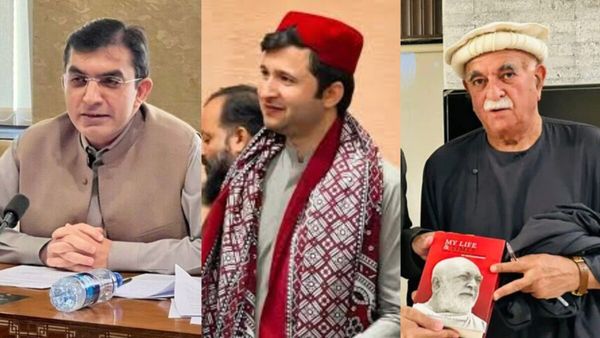
Pakistani political figures call for end to clashes with Taliban
Pakistani politicians Mahmoud Khan Achakzai, Mohsen Dawar and Khushhal Khan Kakar issued a joint statement calling for an end to clashes between the Taliban and Pakistan, citing Pashtun civilian casualties from Pakistani airstrikes in Afghanistan. They described the tensions as an 'undeclared war' fueled by external investments and urged policy changes for peaceful relations.
 Developing
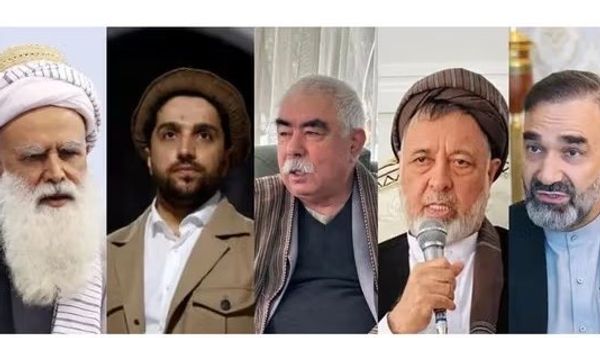
Pakistan Invites Prominent Taliban Opponents to Islamabad Meeting After Eid al-Fitr
Pakistan has invited prominent political and military opponents of the Taliban to Islamabad for a likely meeting after Eid al-Fitr. In separate developments, the Taliban released hundreds of prisoners in Nangarhar and Helmand provinces, while the UN sanctions committee added one Taliban official to its list and removed dozens of others.